Essential Pages for an AI Automation Agency Website
An AI automation agency needs enough website depth to explain a considered technical service, but it does not need a large corporate sitemap. The right structure should help prospective clients understand the offer, identify a relevant service, evaluate credibility and see what to do next. Every page should support one of those decisions rather than exist simply to make the website appear larger.
Quick answer: The essential pages are Home, Services, individual Service pages, Case Studies, About and Contact or Enquiry. Together, they explain the offer, connect services to real business needs, provide evidence and create a clear next step. Pricing and Insights are useful additions, but neither is mandatory at launch.

The minimum AI automation agency website structure
| Priority | Page | Primary purpose |
|---|---|---|
| Essential | Home | Explain the offer and direct visitors to the next step |
| Essential | Services | Show the business problems the agency solves |
| Essential | Service pages | Explain individual offers in sufficient detail |
| Essential | Case Studies | Provide evidence and reduce uncertainty |
| Essential | About | Establish relevant expertise and credibility |
| Essential | Contact or Enquiry | Turn interest into a qualified conversation |
| Add when useful | Pricing | Set expectations about engagement models or cost |
| Add when sustainable | Insights | Support expertise, SEO and ongoing discovery |
Not every agency needs all eight page types immediately. The right AI automation agency website structure depends on how mature the offer is and whether there is enough credible content to make each page useful.
For broader guidance on positioning, proof and conversion, read How to Build an AI Automation Agency Website That Converts.
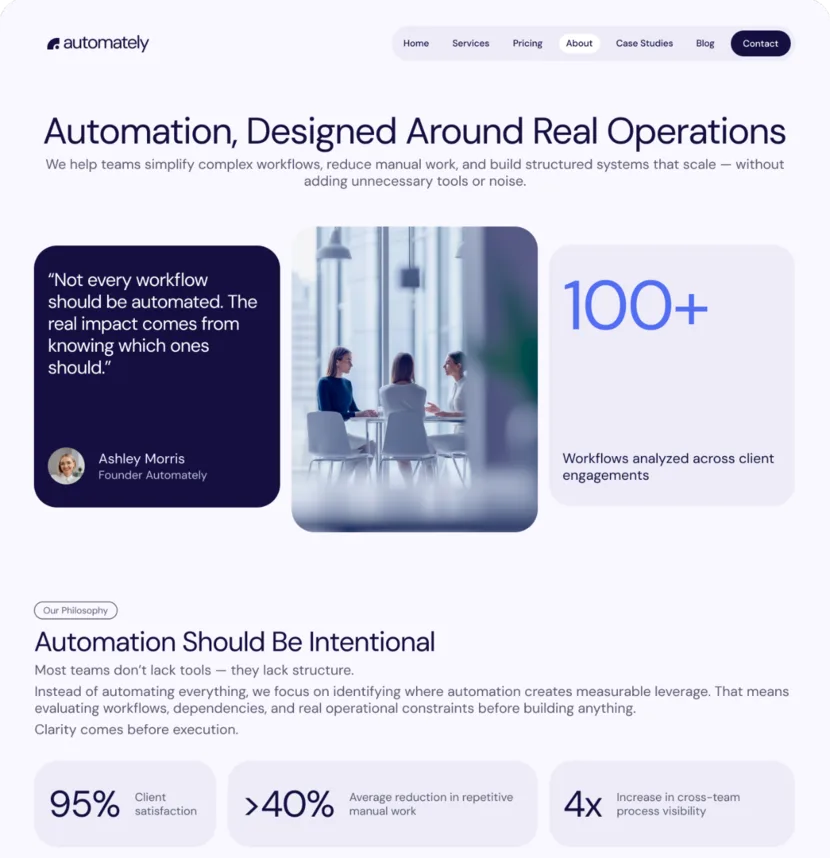
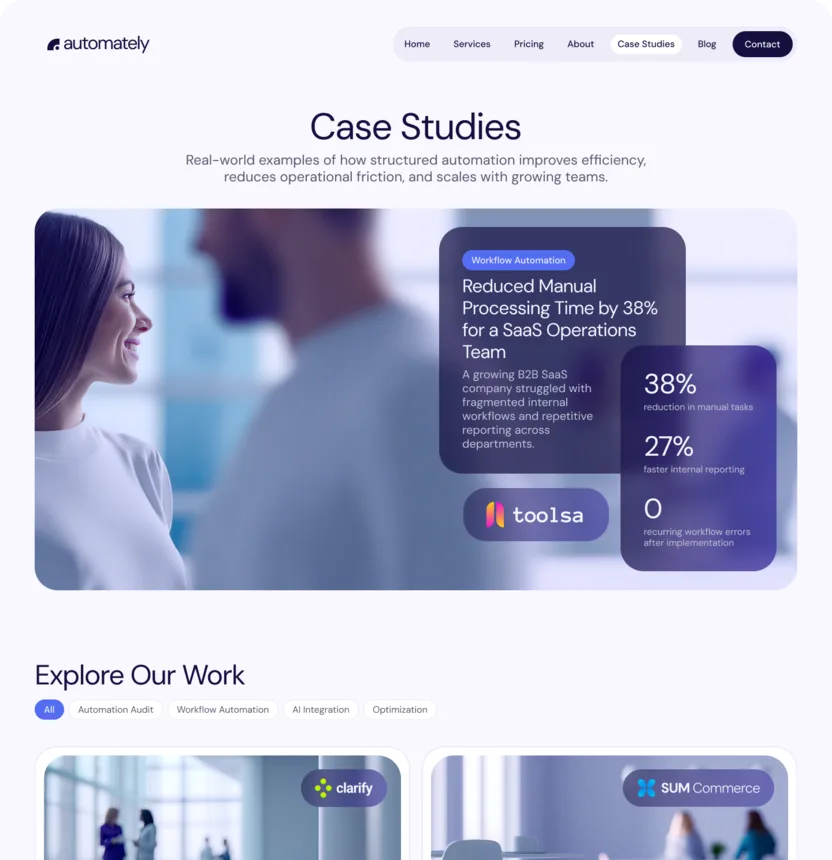
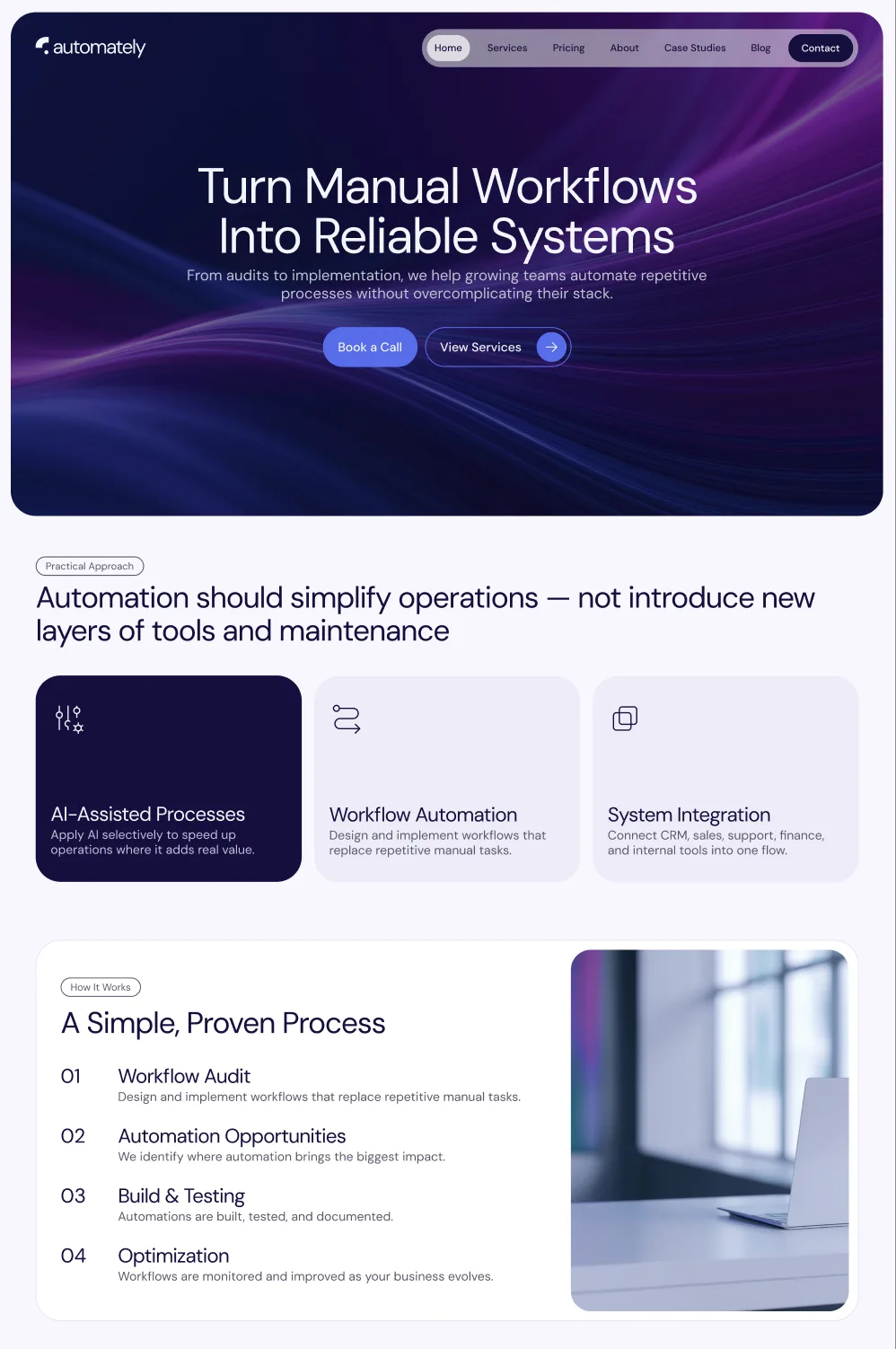
Essential pages and what they need to do
Home
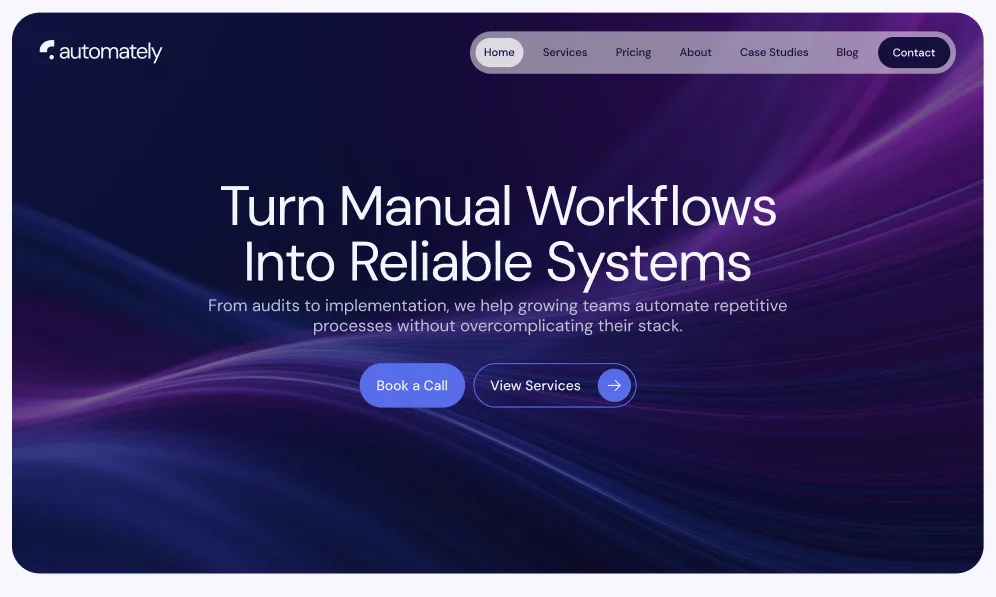
The homepage should orient visitors rather than contain every detail. It needs to establish who the agency helps, the problems it solves, its principal services, supporting evidence and the next step. Clear links should then move interested visitors towards relevant service, case study and enquiry pages.
Services overview
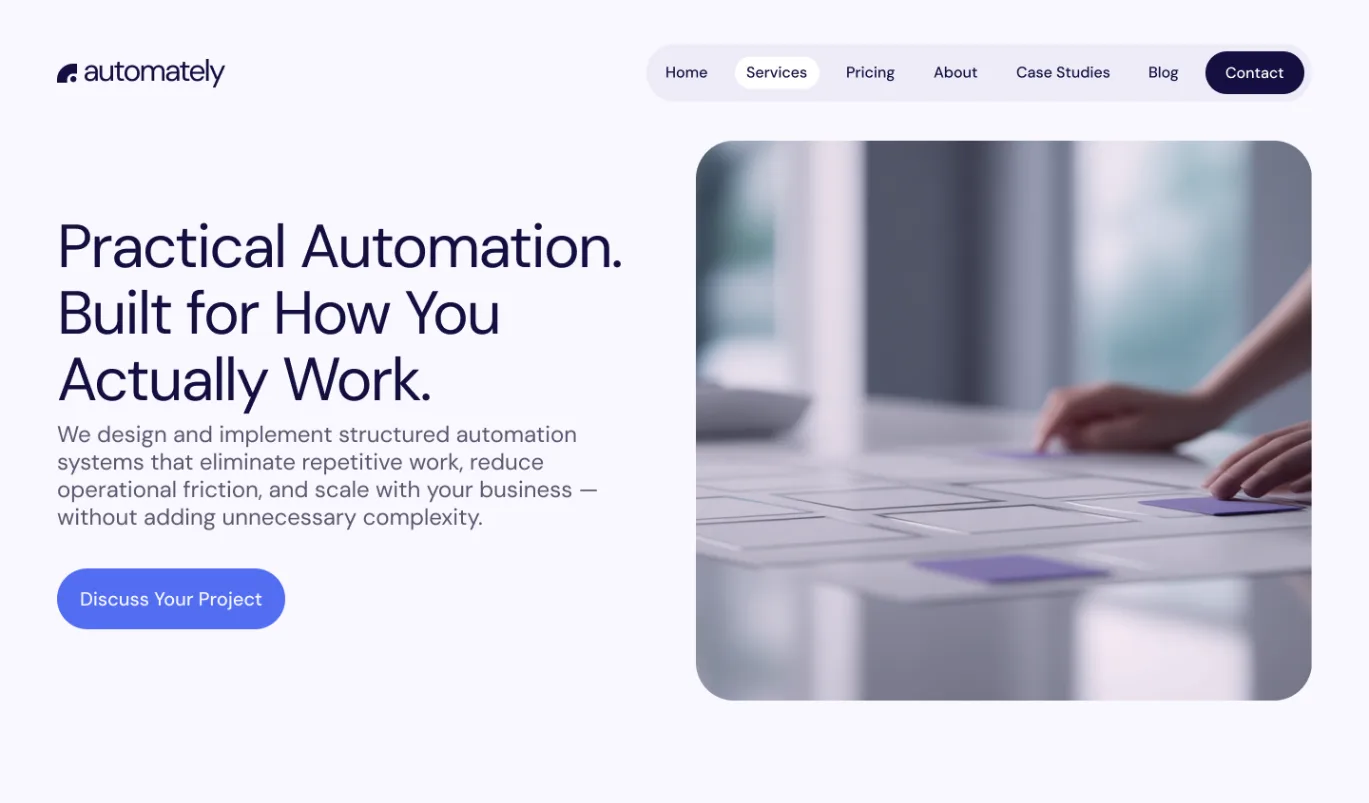
The Services page helps visitors scan the agency’s offers and choose a relevant route. Organise services around recognisable business needs rather than technologies. Each entry should identify the problem addressed, indicate the expected type of outcome and link to a detailed page where the visitor can assess the offer properly.
Individual service pages
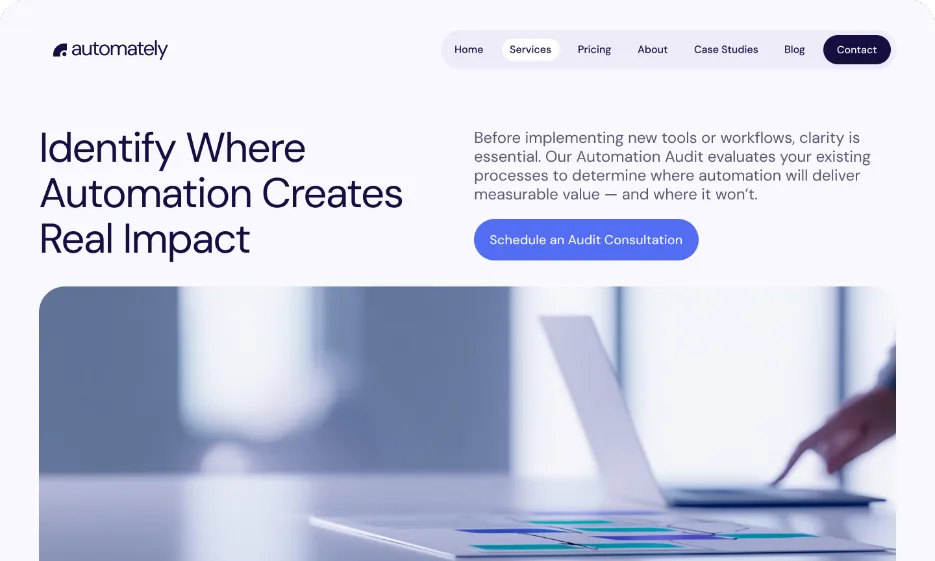
High-consideration services need more explanation than a homepage card can provide. Each service page should clarify who the offer is for, the problem addressed, what the engagement includes, how delivery works, relevant proof and the next step. Separate AI agency service pages also support focused internal links and distinct search intent, although pages alone do not guarantee rankings.
Case Studies
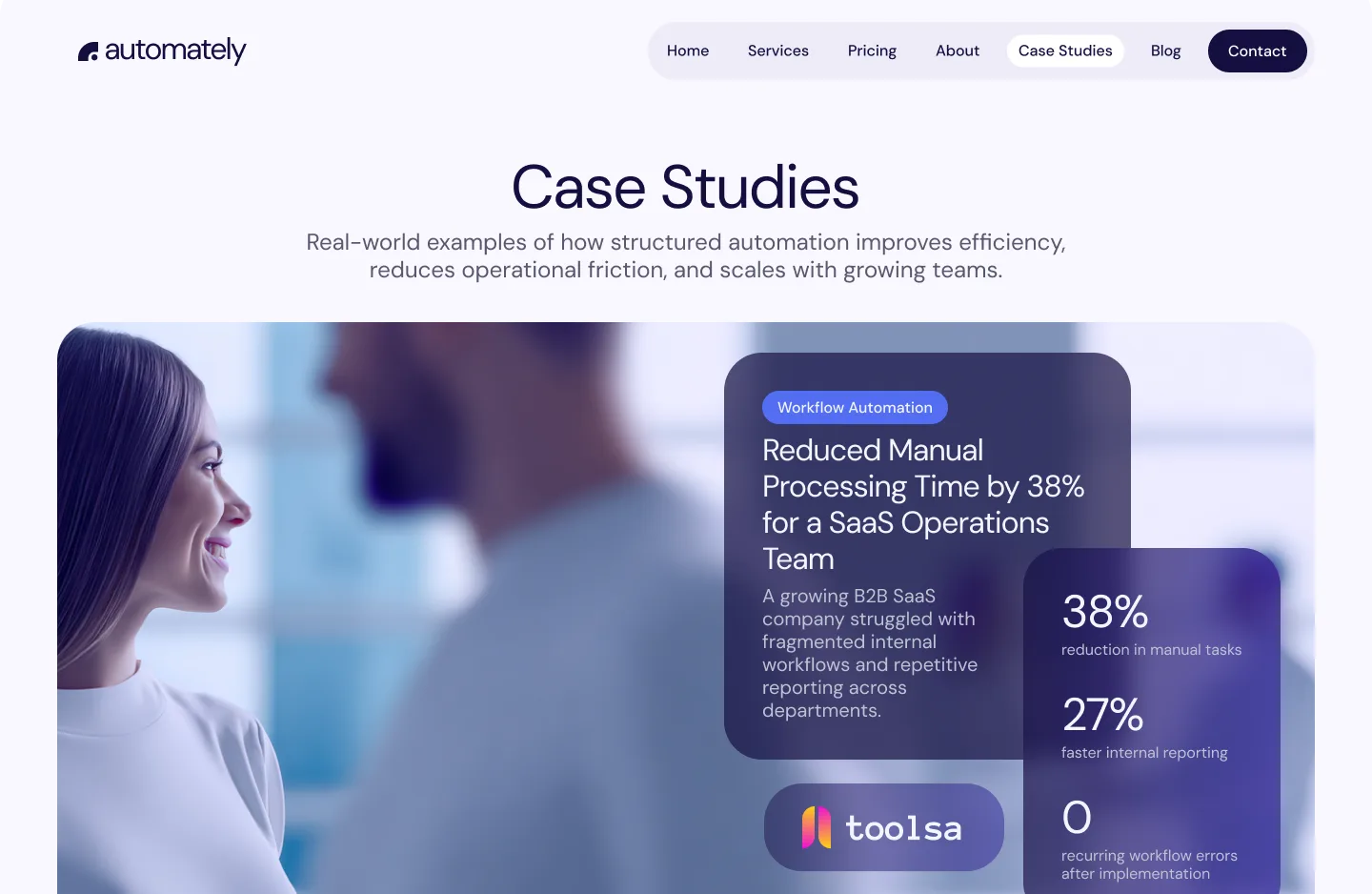
AI automation case studies should show how the agency approaches real business problems. Include the original situation, constraint, solution, implementation approach, a verified result or clear outcome and a relevant CTA. Automately provides a CMS structure for Case Studies, so new projects can use a consistent detail-page layout.
About
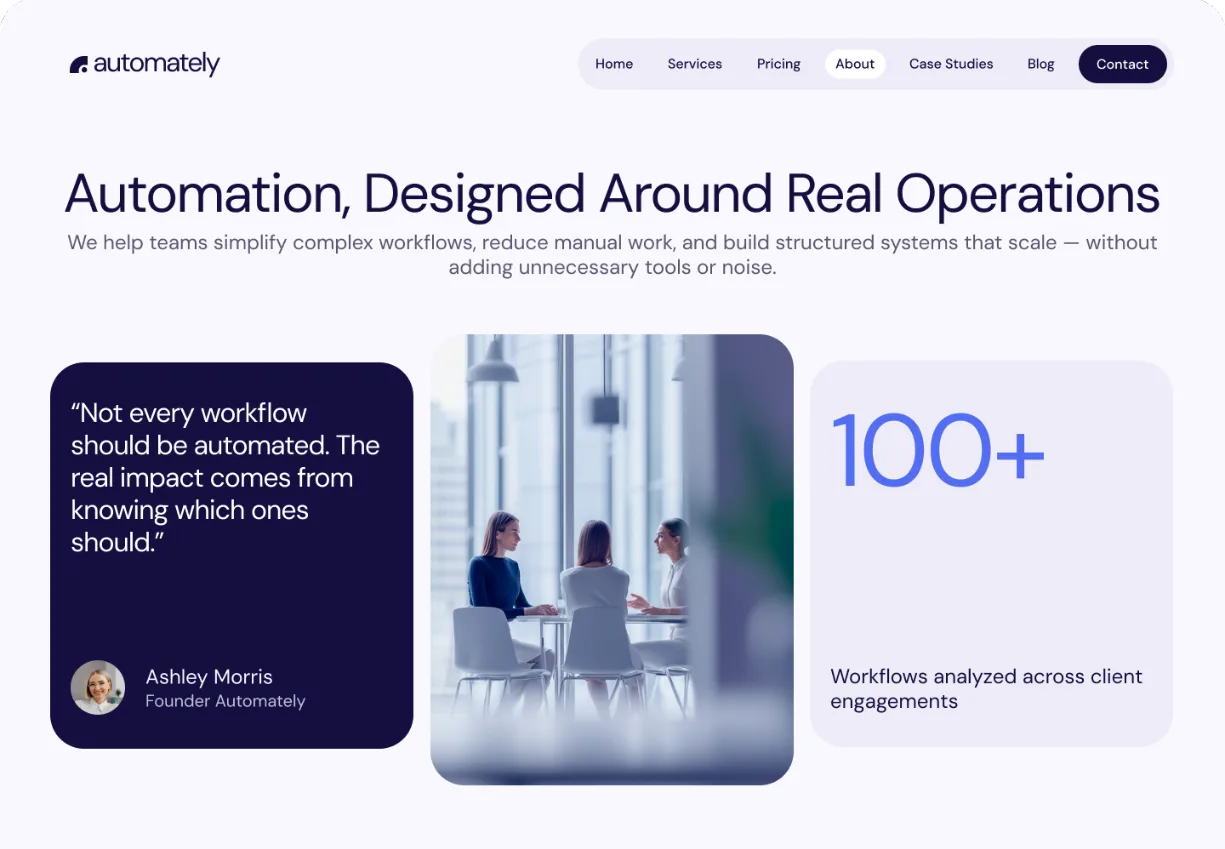
The About page should explain why the team is qualified to deliver the work. Prioritise relevant expertise, delivery principles, industries or systems understood and the way the agency works. Add certifications and partnerships only when applicable and verifiable. Specific capability is more persuasive than a long company history or unsupported claims about innovation.
Contact or Enquiry
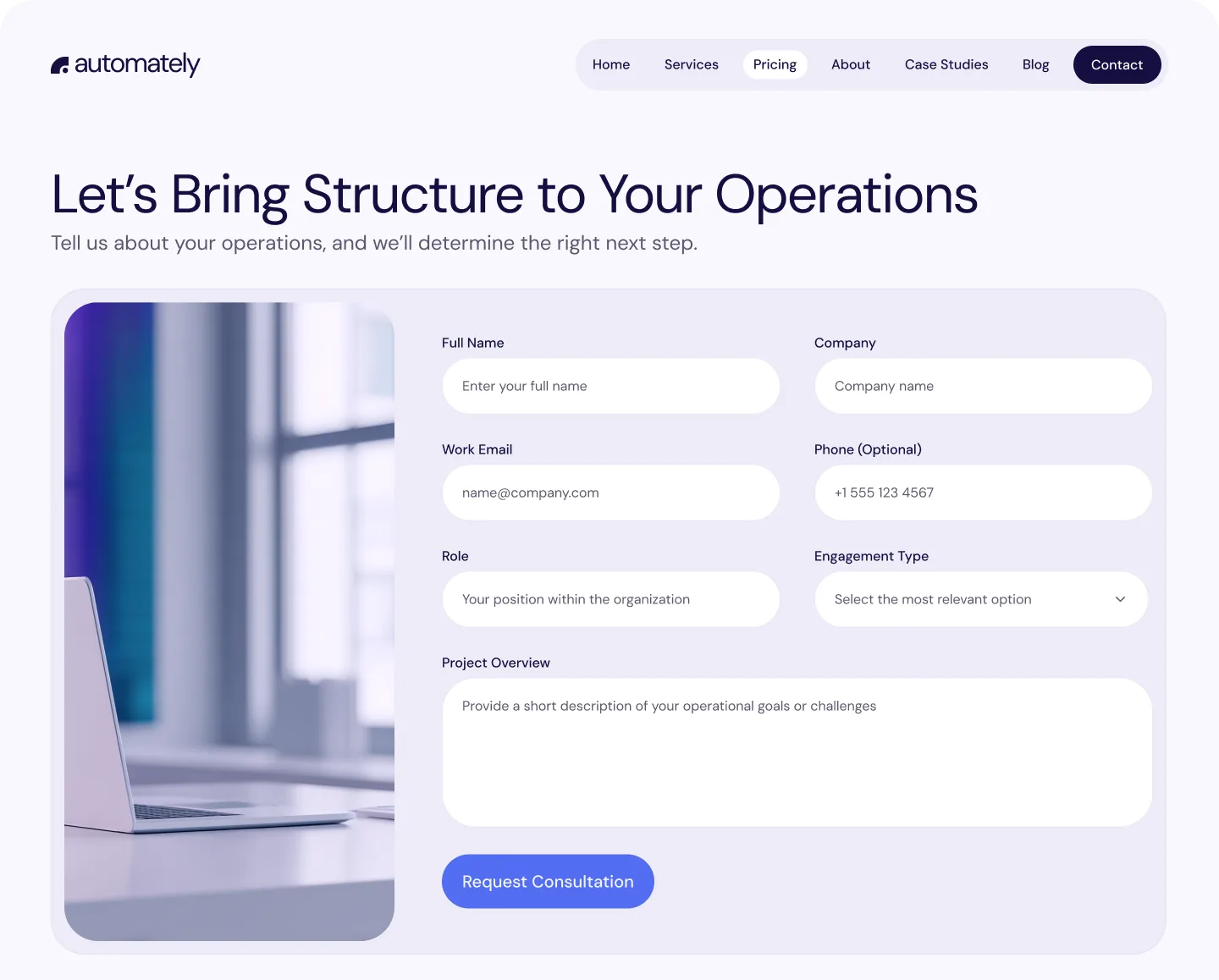
The AI agency contact page should make the next step clear and collect enough context for a useful response. Request the visitor’s name, email, company, service or project type and a short description; make supporting documents optional. Collect detailed requirements through a separate brief after the initial enquiry rather than turning the first form into an application process.
Pages you can add later
Pricing
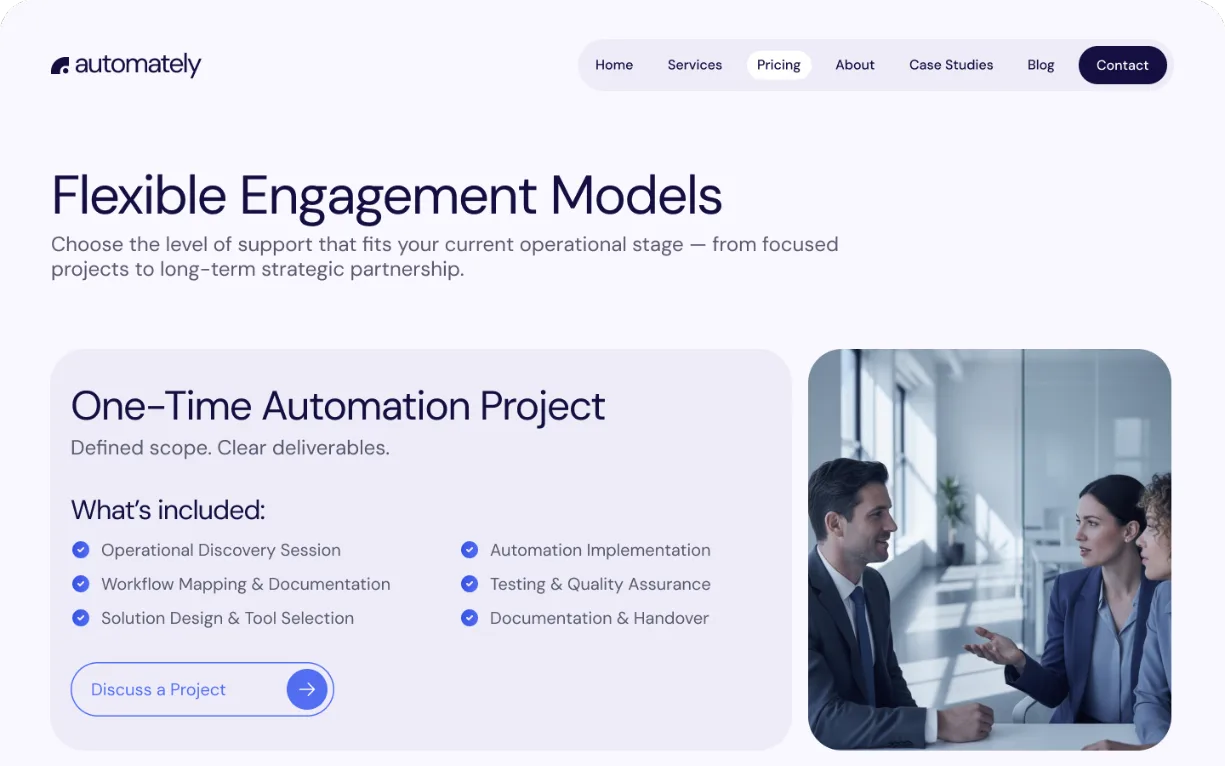
An AI agency pricing page is useful for fixed packages, retainers, starting prices or clearly defined engagement models. For custom projects, explain what shapes a proposal instead of publishing artificial fixed prices.
Insights
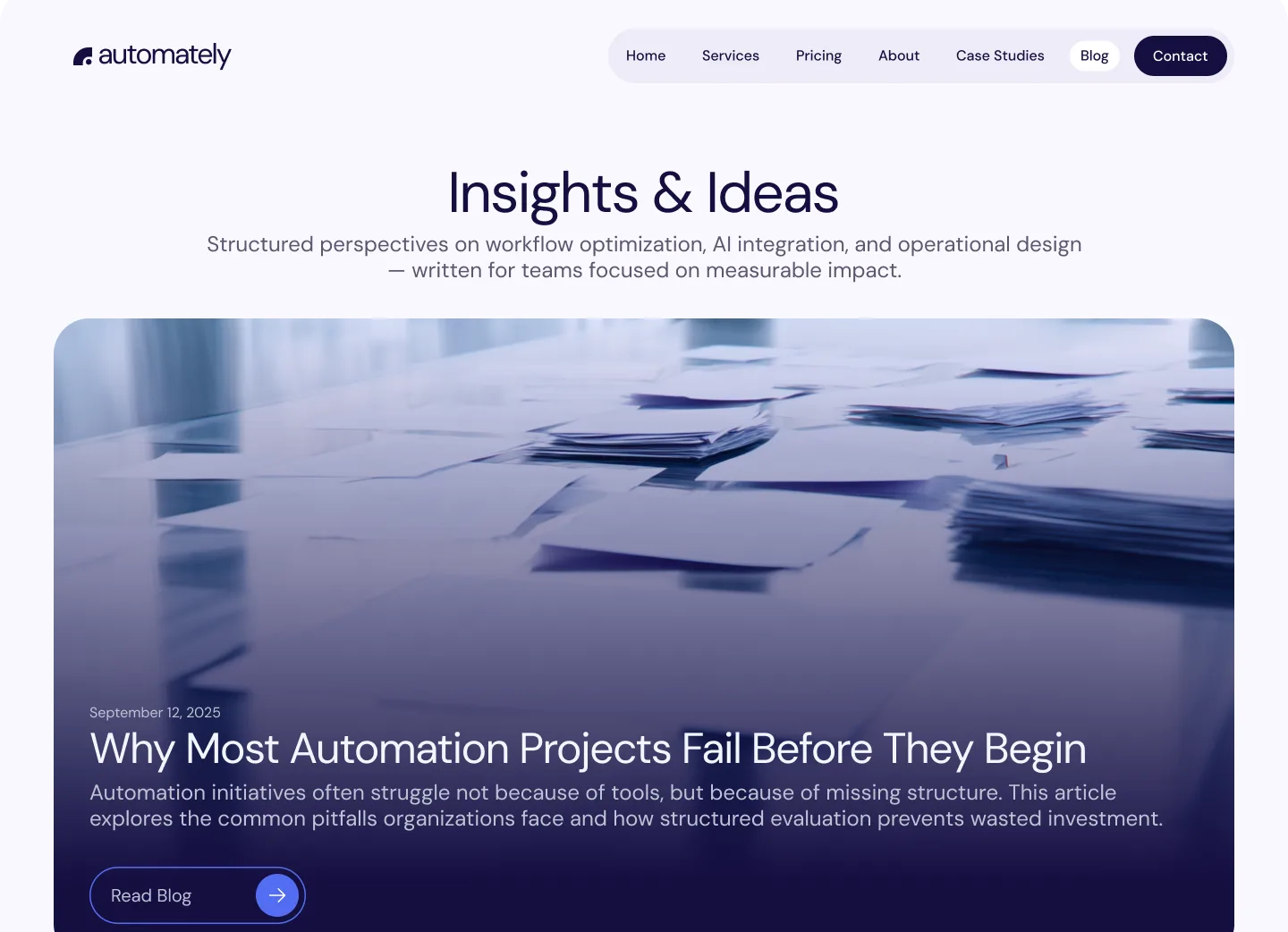
Insights are valuable when the agency can publish practical content consistently. They can answer recurring questions, support long-tail discovery, demonstrate expertise and create internal-linking opportunities. Automately includes a Blog Posts CMS collection, but simply having a blog does not improve rankings.
Mature agencies may later add industry, integration, FAQ, security, data-handling or careers pages. Add them to address a real need, not merely to expand the sitemap.
Start with a complete website system
Automately is an AI automation agency Webflow template designed for AI agencies and technical service businesses. It includes 16 designed pages, more than 30 reusable sections, responsive layouts, global styles, a Style Guide and purposeful GSAP interactions. Three CMS collections support Services, Case Studies and Blog Posts.
That is more than every small agency needs to publish immediately. The benefit is that connected layouts already exist and can be activated as the offer, proof and content grow.
Frequently asked questions
What pages should an AI automation agency website have?
An AI automation agency website should include Home, Services, individual Service pages, Case Studies, About and Contact or Enquiry. Add Pricing when the agency can set meaningful cost expectations and Insights when there is a sustainable publishing plan.
Does every AI automation service need its own page?
No. Separate pages are useful when services address different problems, audiences or search intent and there is enough substance to explain each offer. Closely related or insufficiently developed offers can remain on one Services page until a dedicated page would improve the visitor’s decision process.
Does a new AI agency need case studies?
Case studies are preferable, but a new agency should never invent proof. Initially, use sample workflows, relevant founder expertise and a transparent process. Label illustrative examples clearly, then supplement them with verified case studies as completed work becomes available.
Build only the pages with a clear role
An AI automation agency website needs enough depth to explain the offer and establish credibility, but every page should have a clear role. Start with the essential decision path, then add supporting pages as the agency grows. Explore Automately to implement that structure without starting from a blank canvas.