AI Automation Agency Website Examples
AI automation agencies need to make technical services understandable without reducing them to generic promises about efficiency and growth. The examples below were selected for different strengths in positioning, service presentation, proof, content architecture and enquiry design. This is an editorial collection, not a ranking by aesthetics or presumed commercial performance. It includes seven operating businesses, followed by Automately, a Webflow template created by Collabas.
Quick answer: Strong AI automation agency websites combine specific positioning, services connected to business problems, credible proof, a visible process, practical work examples and a clear next step. Visual styles vary; what matters is whether prospective clients can understand the offer and find enough evidence to continue their decision.

Examples at a glance
| Example | Type | Strongest website lesson |
|---|---|---|
| PhaseLink | AI consulting and automation agency | Distinctive positioning and a transparent engagement model |
| AI Makers | AI transformation studio | Business-focused proof and a developed content system |
| HatchWorks AI | Enterprise AI services company | Enterprise credibility and outcome-led case studies |
| Neurons Lab | Specialised AI consultancy | Clear vertical focus and technical authority |
| Master of Code Global | Conversational AI and development partner | Deep service content connected to an extensive portfolio |
| The Automators | AI automation agency | Industry, location and resource-led website architecture |
| Lumyniq | Specialist AI automation agency | Focused sector positioning and local market relevance |
| Automately | Webflow template by Collabas | A reusable multi-page foundation for an AI automation agency |
Real AI automation agency websites
PhaseLink
Official website:
What the website does well:
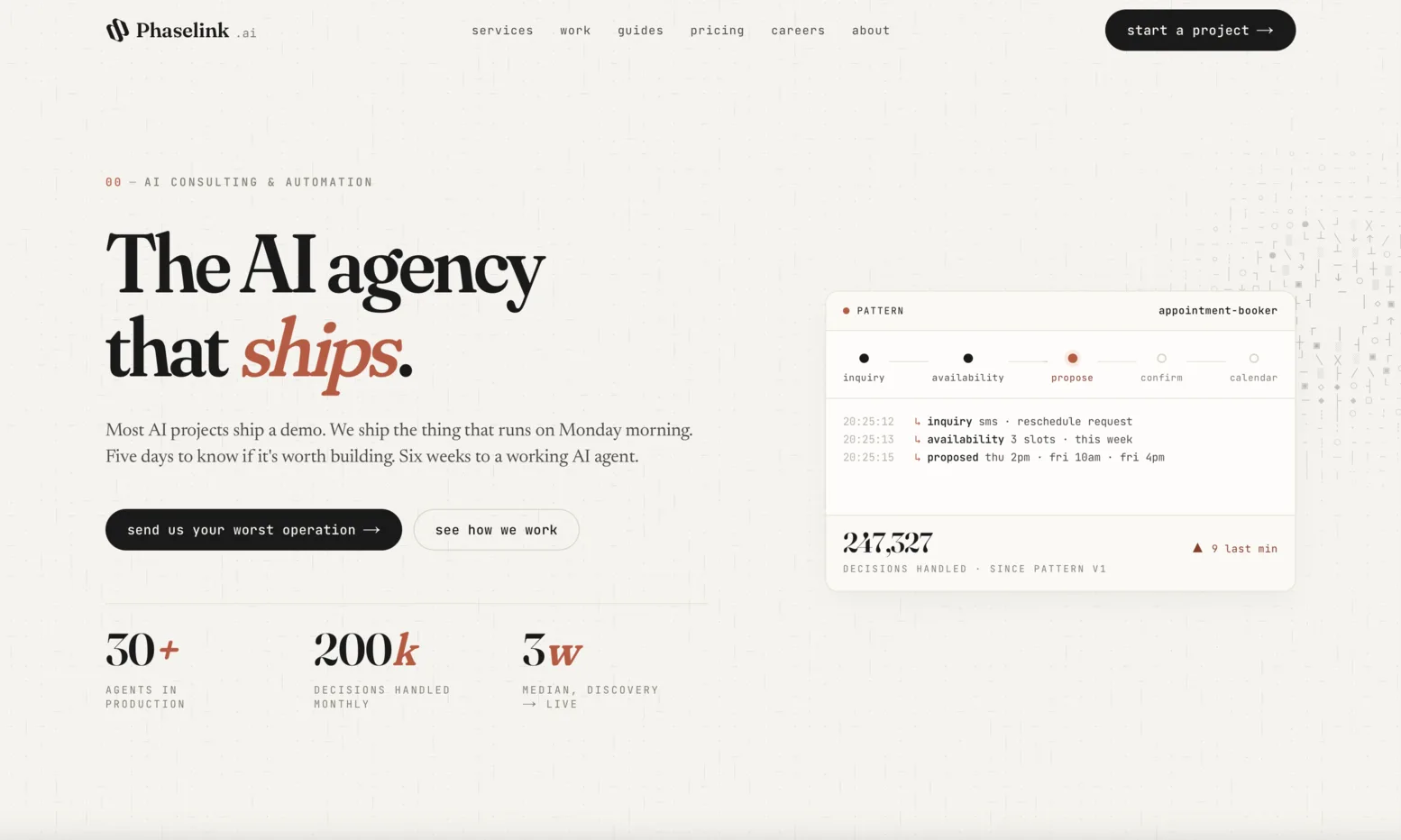
PhaseLink opens with a short position built around shipping production work, then supports it throughout the site. Services are organised into four offers, while the Discovery → Pilot → Production model shows how an engagement progresses. A pricing page explains project shapes, duration and the relationship between setup fees and retainers without pretending every project has one fixed price. Its ROI calculator gives visitors a useful way to frame the commercial problem before making contact.
What to learn from it:
Explain how an engagement works as clearly as you explain what your agency can build.
AI Makers
Official website:
What the website does well:
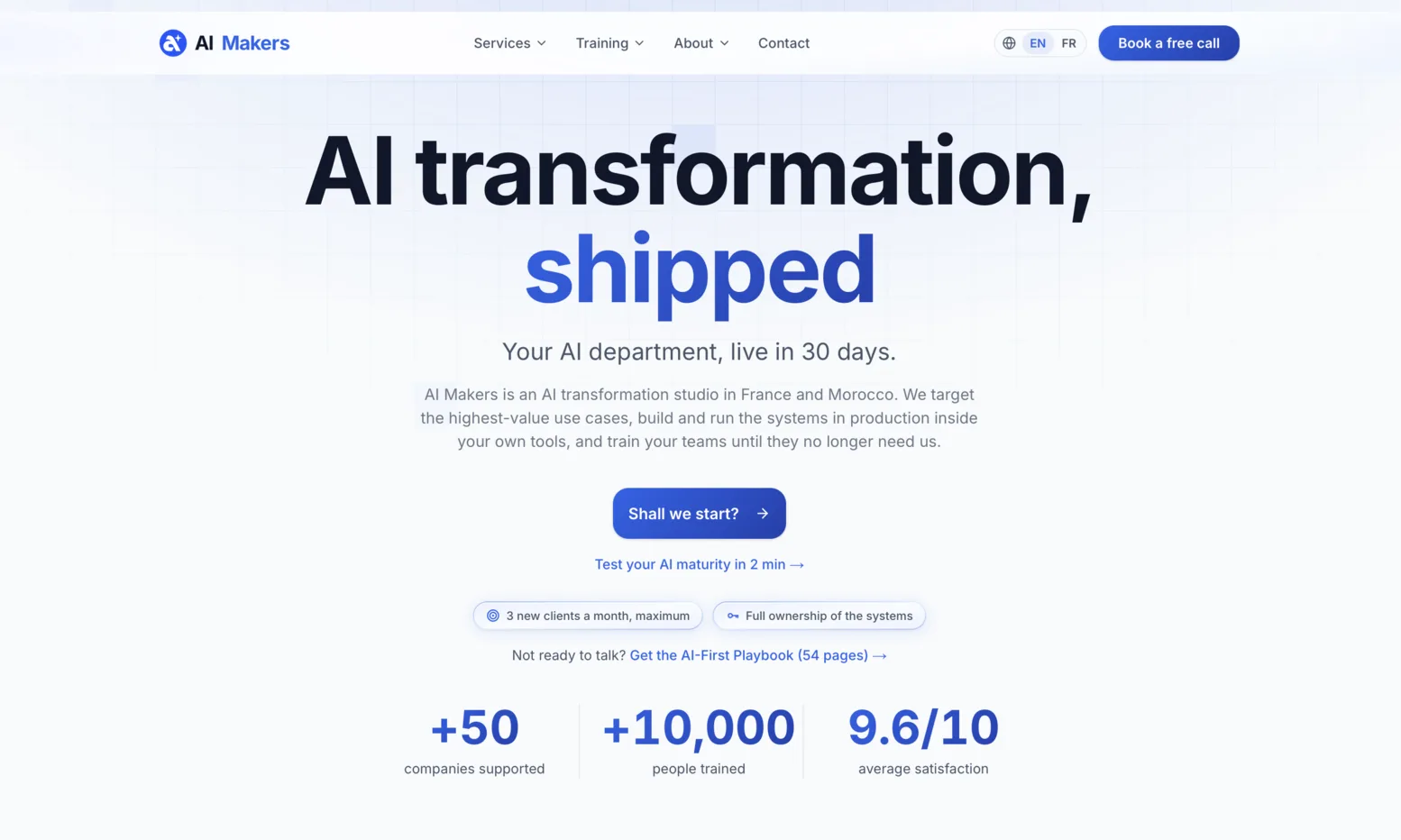
AI Makers builds a connected content system rather than asking the homepage to carry the entire sales argument. Its offers, transformation model, client visibility, case studies, industry pathways, team profiles and diagnostic resources give visitors several ways to investigate the business. The language connects implementation to operational change, while case-study pages organise company-published results around a before, after and implementation approach. Team visibility adds a human layer to the technical offer.
What to learn from it:
A developed content system can support enterprise credibility while creating several relevant routes into the website.
HatchWorks AI
Official website:
What the website does well:
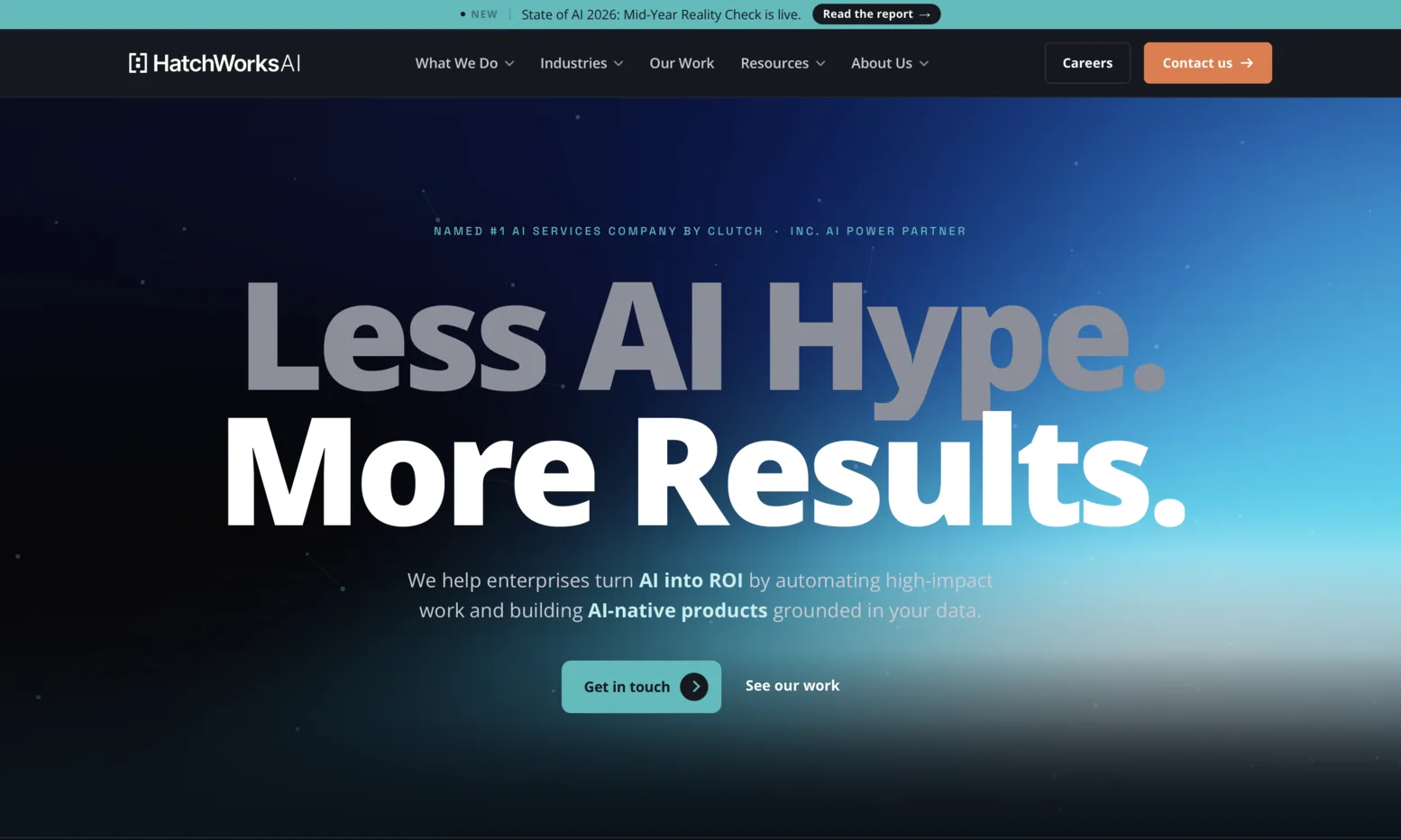
“Less AI Hype. More Results.” gives HatchWorks AI a recognisable point of view before introducing its broader services. The architecture separates AI strategy, AI-driven development and change management into a decide, build and adopt model. Client logos, partnerships, industry pathways and a substantial work library provide several layers of evidence. Case-study titles foreground the problem or transformation, helping buyers scan for relevant outcomes rather than internal terminology.
What to learn from it:
A differentiated headline becomes more credible when the rest of the website provides structured evidence for it.
Neurons Lab
Official website:
What the website does well:
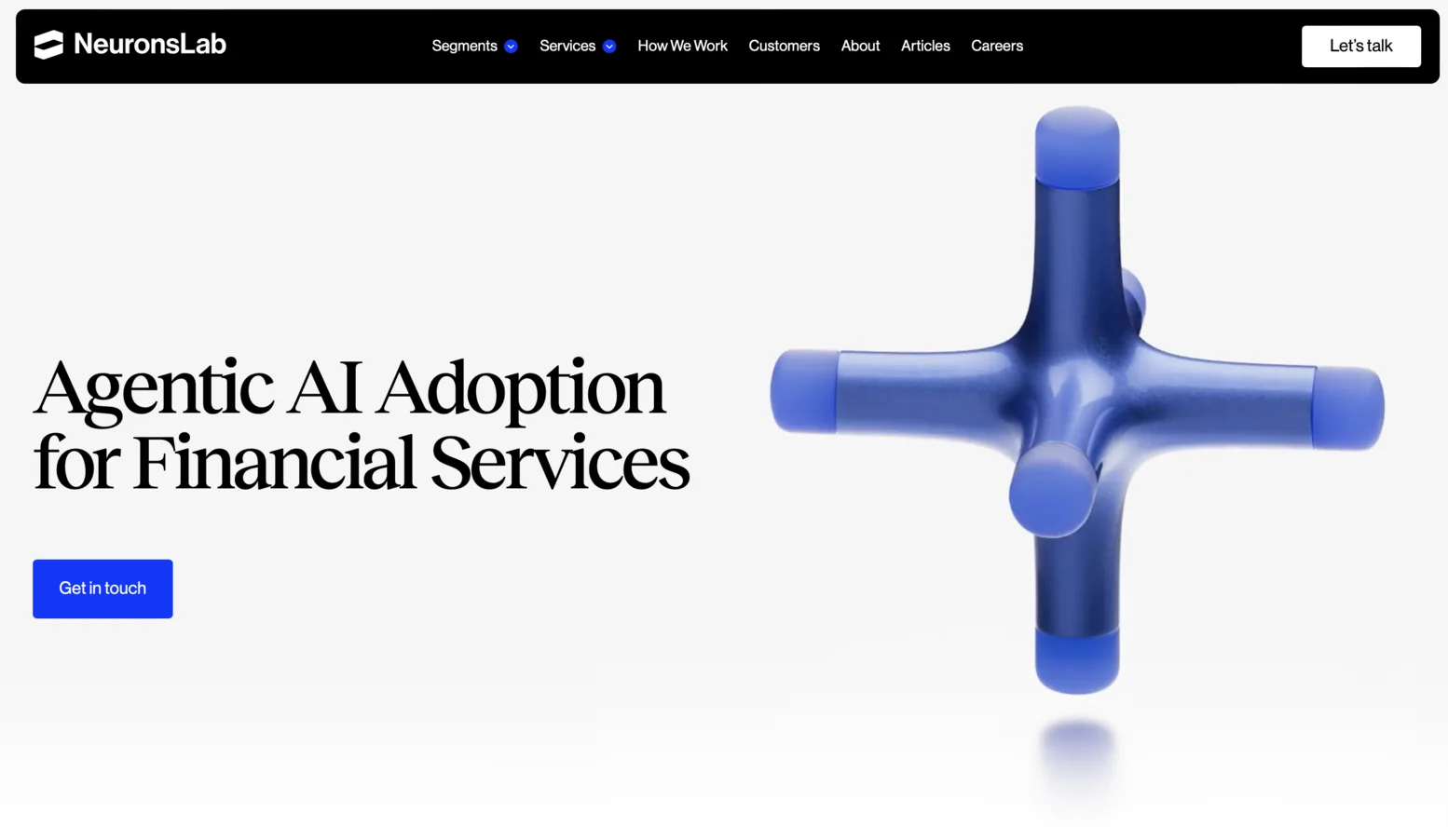
Neurons Lab makes its specialisation explicit with “Agentic AI Adoption for Financial Services”. The site develops that position through financial segments, focused services, customer examples and language addressing governance, accuracy and operational control. Visitors can move into specific contexts such as wealth management, retail banking, insurance or corporate banking. This narrower architecture makes technical authority easier to evaluate because the services and evidence share one recognisable business environment.
What to learn from it:
A narrower market position can make both service relevance and supporting proof easier for buyers to assess.
Master of Code Global
Official website:
What the website does well:
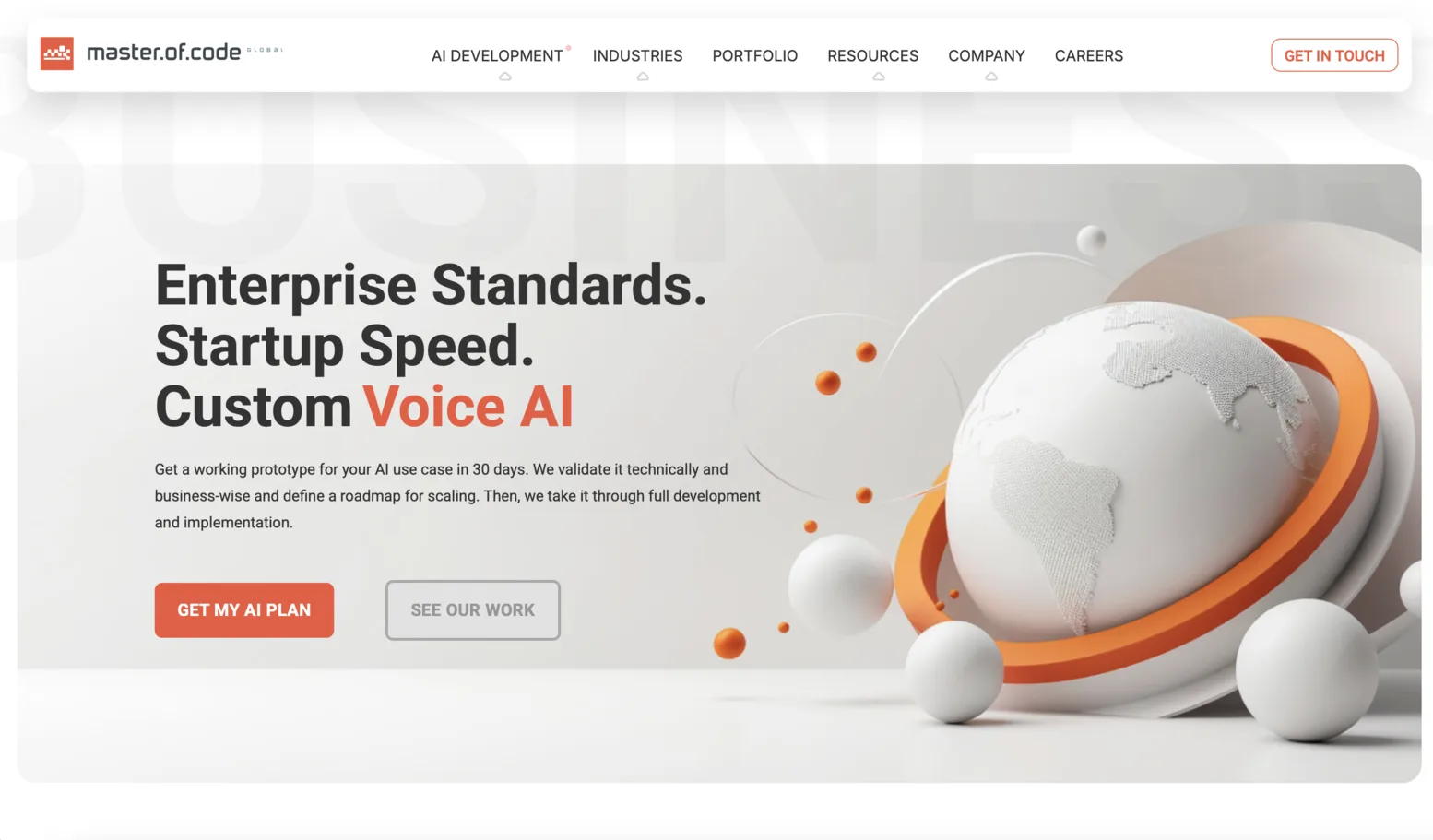
Master of Code Global uses depth for buyers researching different AI capabilities. Its navigation distinguishes AI development, agents, conversational AI, consulting, pilots and assessments, while the portfolio connects those offers to project examples. Assessment tools and defined starting offers create routes for visitors not ready to commission a full implementation. This content volume would be excessive for a small specialist agency, but it demonstrates how detailed service pages can connect directly to evidence and entry points.
What to learn from it:
Detailed service pages become more persuasive when visitors can move directly to related work or an appropriate first engagement.
The Automators
Official website:
What the website does well:
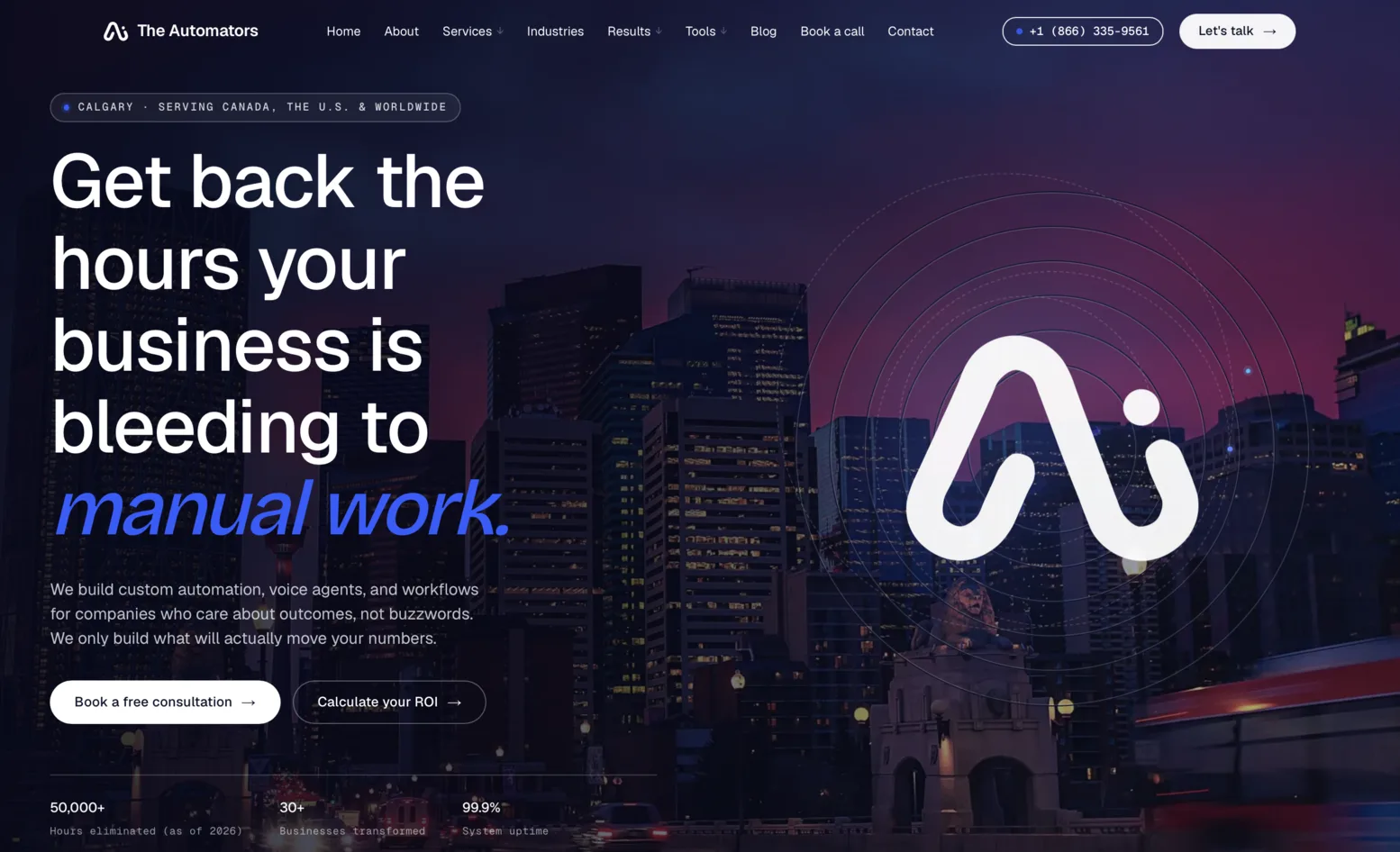
The Automators extends its site beyond general service descriptions through industry pages, geographic relevance, case studies and interactive resources. Visitors can calculate potential ROI, assess AI readiness, explore customer-service costs or prioritise a process before booking a consultation. This gives early-stage prospects a practical next action while supporting pages address specific business contexts. The architecture serves several audiences without compressing every message into one generic homepage.
What to learn from it:
Supporting pages and diagnostic tools can address narrower needs before a visitor is ready for a sales conversation.
Lumyniq
Official website:
What the website does well:
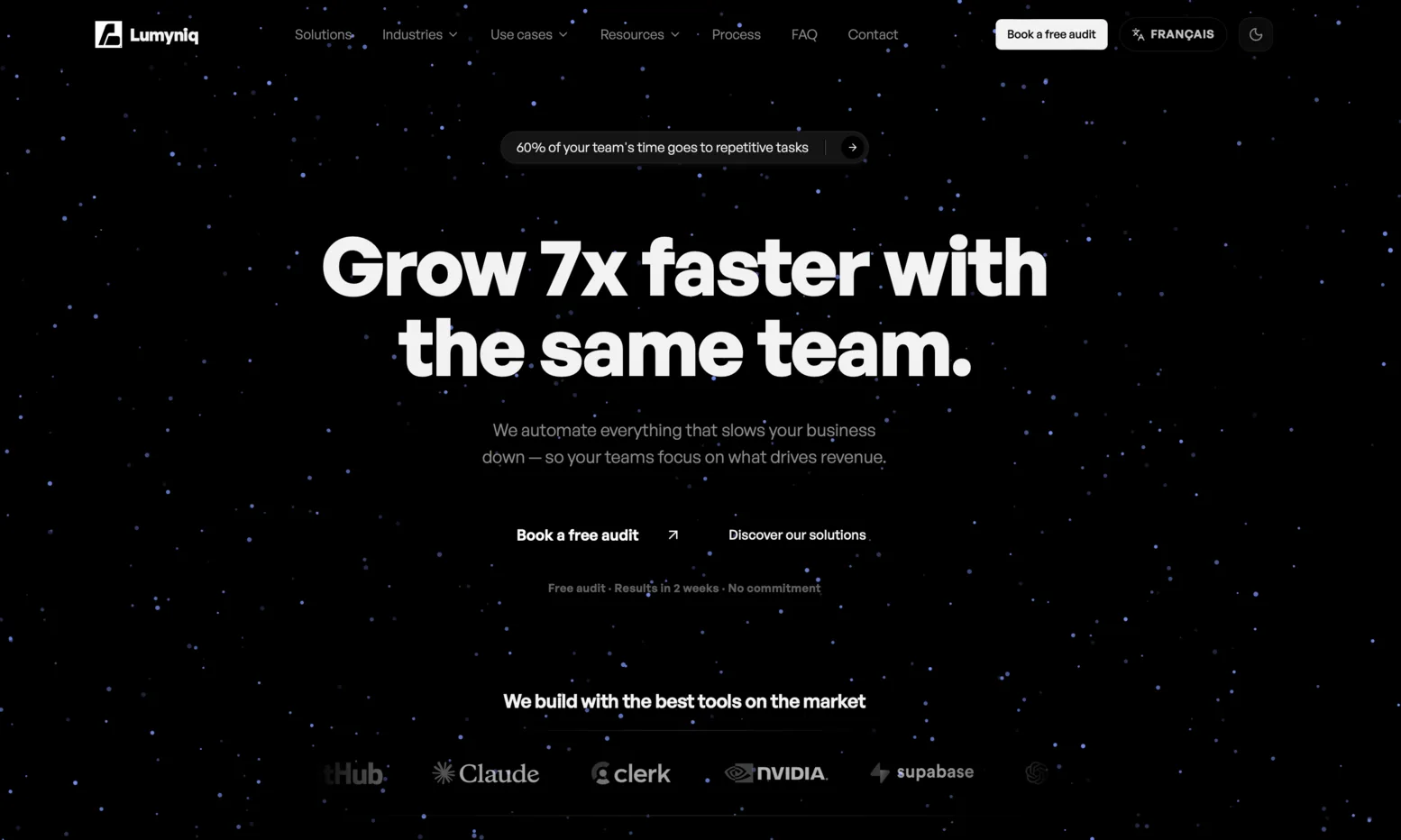
Lumyniq is a useful smaller-agency example because its French-market position, service focus and next step are immediately visible. The site presents automation, AI agents, SaaS development and consulting, then routes visitors towards property, HR, legal and medical sectors. A free audit CTA appears consistently, while the process makes the path from conversation to audit, design, deployment and optimisation tangible. Focused language and local relevance reduce the need for enterprise-scale content.
What to learn from it:
A smaller agency can feel focused and credible when its market, offer and first step are clear from the outset.
Automately
Official website:
https://automately-b109e5.webflow.io
What the website does well:
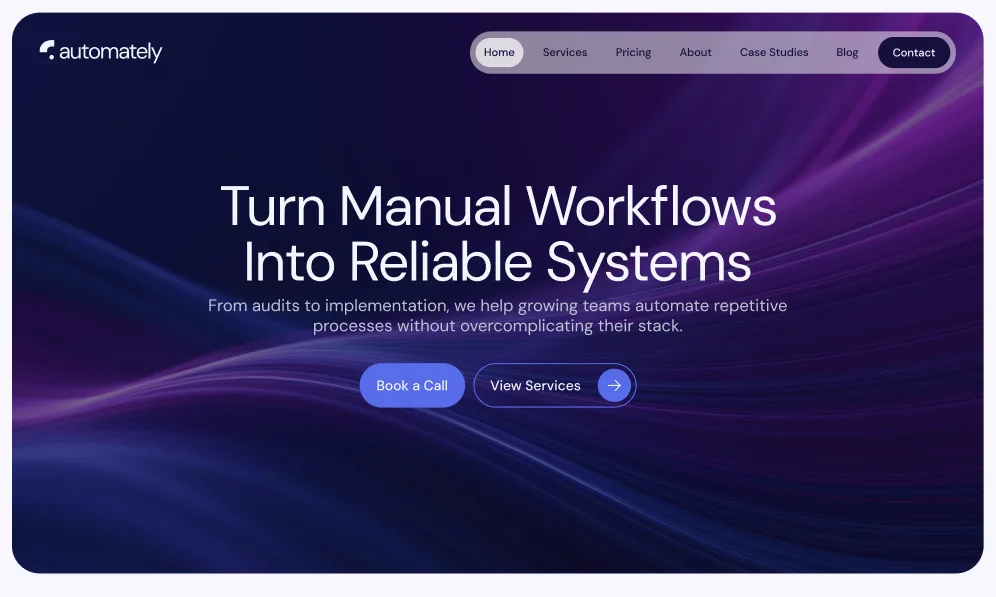
Automately is a Webflow template created by Collabas, the publisher of this article. It is included as a template example rather than a real agency website. The template provides a ready-made system for AI automation agencies. Its 16 designed pages and 30+ reusable sections connect a homepage, services, CMS-powered detail pages, case studies, pricing, About, blog content and enquiry. Three CMS collections cover Services, Case Studies and Blog Posts, supported by responsive layouts, global styles, a Style Guide and GSAP interactions. Unlike the business examples, Automately does not contain real positioning or proof by default. Buyers must add their service content, project evidence, brand, imagery and SEO metadata. Its value is the underlying structure, allowing those decisions to be implemented without designing every page and component from an empty canvas.
What to learn from it:
A specialised template can provide the website system while leaving strategy, content and evidence in the hands of the business.
What the strongest websites have in common
The examples use different visual languages and levels of content depth, but five recurring website patterns stand out:
- A recognisable position. Visitors can understand who the business helps, what it delivers and how its perspective differs from a generic AI provider.
- Services connected to business problems. The sites translate agents, models and automation capabilities into operational situations that buyers can recognise.
- Visible evidence. Case studies, client relationships, delivery processes, credentials and concrete work give visitors reasons to investigate further.
- Enough depth for a considered service. Important offers and project examples receive dedicated pages instead of being compressed into one homepage.
- A clear next step. Visitors are directed towards an audit, assessment, introductory call or project enquiry that matches the agency’s sales process.
These are observable website decisions, not evidence that one site converts better than another. The right combination depends on the audience, service model and proof available to the business. For a broader framework, see how to build an AI automation agency website around positioning, proof and conversion.
Frequently asked questions
What makes a good AI automation agency website?
A good AI automation agency website establishes a specific position, explains services in business language, provides relevant proof, makes the delivery process visible and offers a clear next step. There is no single visual style that every agency should follow. The design should support the audience, complexity of the offer and information clients need before making contact.
How can a new AI automation agency show credibility without case studies?
Use relevant founder expertise, clearly labelled sample workflows, a detailed delivery process, platform certifications and applicable experience from previous roles or projects. Explain how work is scoped, tested and delivered. Do not invent client stories, hide fictional clients behind anonymity or present projected results as outcomes that have already been achieved.
Can an AI automation agency use a website template?
Yes. A specialised template can provide responsive layouts, CMS structure and reusable sections, reducing the amount of design and development required. It cannot replace original positioning, accurate service content, real evidence or brand customisation. Automately provides this foundation specifically for AI automation agencies and related technical service businesses.
Choose the example that fits your agency
The most useful reference is not necessarily the most animated or content-rich website. It is the one whose structure matches your audience, service model and available proof. If you need a purpose-built foundation rather than a blank canvas, explore the Automately Webflow template.